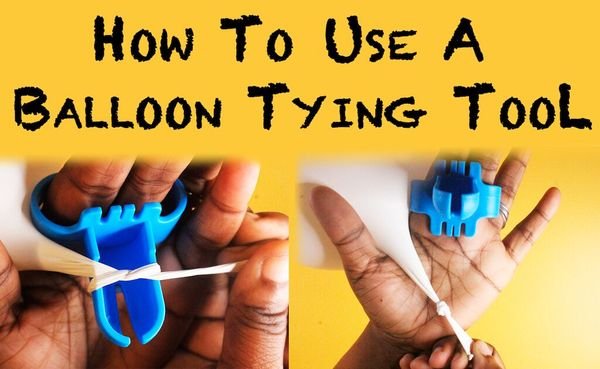
If you've ever wrestled with dozens of balloons, fingers raw and knot-tying skills put to the ultimate test, you know the struggle is real. What if there was a simple, ingenious device to banish the pain and speed up your party prep? Enter the world of balloon tying tools. These unassuming plastic aids are game-changers, transforming a tedious chore into a swift, effortless task. Whether you're a seasoned event planner or just hosting a backyard birthday, understanding the types of balloon tying tools available and how to use them will undoubtedly make your next setup a breeze.
This guide dives deep into everything you need to know, from the basic mechanics to expert tips, ensuring you spend less time fumbling with knots and more time enjoying the celebration.
At a Glance: Your Quick Guide to Balloon Tying Tools
- Problem Solved: Eliminates finger strain and speeds up the balloon tying process.
- Core Design: Typically a simple, long plastic piece designed for efficient knotting.
- How It Works: Involves wrapping the balloon end around the tool and pulling through an opening to form a secure knot.
- Key Benefit: Saves time, reduces hand fatigue, and ensures consistent, tight knots.
- Versatility: Works for standard balloons and can even integrate ribbons into knots.
- Expert Tip: Professional balloon artists like Ahzahdeh Neshat recommend specific techniques for tying multiple balloons or safely untying a knot.
Why Even Bother with a Balloon Tying Tool? The Secret to Stress-Free Decorating
Imagine a world where your fingers don't ache after tying fifty balloons for a vibrant arch or a stunning garland. That's the world balloon tying tools unlock. At its core, a balloon tying tool simplifies tying many balloons without the typical finger strain that comes from wrestling with taut latex. It’s a small, inexpensive accessory that pays dividends in comfort, speed, and overall efficiency, especially when you're preparing for a large event or frequently work with balloons.
Think of it as your personal assistant for party prep, always ready to lend a "hand" – specifically, the plastic kind. This unassuming gadget isn't just about avoiding discomfort; it's about reclaiming your time and energy, letting you focus on the bigger picture of your party décor rather than the mundane task of knotting. It’s truly one of those simple innovations that makes you wonder how you ever managed without it. When you're ready to upgrade your party planning arsenal, you can Discover balloon tying tools that will revolutionize your decorating experience.
Unpacking the Design: What Exactly Is a Balloon Tying Tool?
While the market might showcase slight variations, the fundamental design of most balloon tying tools revolves around a single, highly effective concept: a long plastic piece featuring specific contours and openings to facilitate knot formation. There aren't drastically different "types" in terms of core functionality; rather, you'll find variations in ergonomics, material quality, and sometimes minor additions for grip or specific uses.
Most tools consist of:
- A "Nose" or Tying Arm: This is the primary part around which the balloon's neck is wrapped. It's often tapered or curved to guide the latex smoothly.
- A Hollow Middle or Opening: This space allows the balloon's end to be passed through, creating the knot.
- A Base or Handle: Designed to fit comfortably on your fingers, providing leverage and stability during the tying process.
The genius lies in its simplicity. By providing a fixed structure around which to manipulate the balloon, the tool takes the pressure off your fingertips, allowing the knot to form quickly and consistently. You’ll find these tools in various colors and plastics, some more durable or flexible than others, but their operational principle remains identical.
Mastering the Knot: Step-by-Step with Your Balloon Tying Tool
Using a balloon tying tool might look intimidating at first glance, but it's remarkably intuitive. Once you get the hang of it, you'll be tying knots faster than you ever thought possible. Let's break down the core processes.
How to Tie a Standard Balloon with the Tool
This is the bread and butter of balloon decorating. Follow these steps for a perfectly tied balloon every time:
- Position the Tool: Slide the tool onto your index and middle fingers of your non-dominant hand. Position the nose (the longer, curved end) in your palm, with the open side facing your fingertips. If the tool feels a bit loose, you can often use your ring finger as well for added stability.
- Pinch and Stretch: Pinch the end of the inflated balloon and give it a good stretch. This makes the latex more pliable and easier to work with.
- First Wrap: Wrap the stretched balloon end once tightly around the middle of the tool’s nose. Ensure it’s snug against the tool.
- Cross and Tuck: Cross the balloon end over the wrapped section you just made. Now, guide it into the hollow middle of the tool, pushing it underneath the stretched part of the balloon that's still around the nose.
- Secure the Knot: While still holding the very end of the balloon, slide the entire knot-in-progress straight off the tool's nose. Give a gentle pull on the balloon's end to tighten the knot securely.
Practice makes perfect! After a few tries, this sequence will become second nature, allowing you to quickly and comfortably tie dozens of balloons without any finger fatigue. When you're planning your next big event, taking the time to protect your hands during long tying sessions will pay off significantly.
Tying Balloons onto a Ribbon: Adding That Extra Flair
Integrating ribbons directly into your balloon knots is a fantastic way to create professional-looking garlands, arches, or simply individual balloons that are ready to go. The balloon tying tool makes this process seamless.
- Tool Placement: Just as before, slide the tool onto your index and middle fingers of your non-dominant hand, with the nose in your palm and the open side facing your fingertips.
- Stretch the Balloon: Stretch the inflated balloon's end, preparing it for the wrap.
- Initial Wrap: Wrap the stretched balloon end tightly around the tool’s nose, just like you would for a standard knot.
- Secure the Balloon End: Most tying tools have a small slot or groove, either in the middle of the nose or near the base. Secure the free end of the balloon into this slot. This holds it steady while you introduce the ribbon.
- Introduce the Ribbon: Take your ribbon and feed it into the open side of the tying tool. Make sure the ribbon goes underneath the stretched section of the balloon that's wrapped around the nose.
- Cross and Tuck Again: Cross the balloon end over the wrapped part and tuck it into the hollow part of the nose, feeding it underneath the stretched section of the balloon (and now also underneath the ribbon).
- Finalize the Knot: Slide the balloon straight off the nose. Give the balloon end a good pull to tighten the knot, ensuring the ribbon is firmly secured inside.
This technique is incredibly useful for creating professional garlands or for individual balloons that need to be tied to weights or other decor elements. It's an efficient way to streamline your decorating process, leaving you more time to elevate your decorating game and impress your guests.
Beyond the Basic: Exploring Subtle Tool Variations
As mentioned, true "types" of balloon tying tools are subtle. The core mechanism is largely universal. However, variations exist in:
- Material Quality and Durability: Some tools are made from basic, lightweight plastic, while others might use more robust, flexible polymers designed for heavy-duty use. Professional-grade tools might feel sturdier in hand.
- Ergonomics and Grip: While all tools are designed to fit fingers, some might have slightly different shapes or textured grips to enhance comfort during prolonged use. A wider base or a more contoured finger rest can make a difference for those with larger or smaller hands.
- Integrated Features: A few tools might feature a small cutter for ribbon or an additional hook, though these are less common as the focus remains squarely on the tying function.
- Quantity: You can find tools sold individually, in small multi-packs, or as part of larger balloon decorating kits. If you're a serious party planner or professional, buying in bulk ensures you always have one handy.
Ultimately, the best "type" of balloon tying tool is the one that feels most comfortable and efficient for you. Experiment with a few if possible, but rest assured, the fundamental tying process remains the same across nearly all designs.
The Unsung Benefits: Why Every Party Planner Needs One
Beyond the obvious relief for your fingers, a balloon tying tool brings a host of other advantages to the table, making it an indispensable item in any party planner's kit:
- Speed and Efficiency: Once you master the technique, you'll tie balloons significantly faster than by hand. This is crucial when dealing with hundreds of balloons for large installations like balloon arches.
- Consistency: Every knot will be tight and uniform, leading to a much more professional and aesthetically pleasing display. No more loose knots or awkwardly tied balloons.
- Reduced Waste: Properly tied knots minimize air leakage, meaning your balloons stay inflated longer. This also reduces the chance of accidental pops due to excessive tension from manual tying.
- Accessibility: For individuals with limited dexterity, arthritis, or small hands, these tools can make balloon decorating possible and enjoyable, where it might otherwise be frustrating or painful.
- Hygiene: In a professional setting, or even at home, using a tool reduces direct contact with the latex, which can be a plus for those with sensitivities.
In essence, a balloon tying tool is an investment in your comfort, your time, and the quality of your balloon displays. It simplifies a fiddly task, allowing you to enjoy the creative process of decorating even more.
Expert Insight: Tips from Professional Ahzahdeh Neshat
Sometimes the simplest advice comes from those who do it best. Professional balloon artist Ahzahdeh Neshat offers these invaluable tips to elevate your balloon game:
To Tie Multiple Balloons Together
Creating clusters or quads (groups of four) is a fundamental technique for building balloon arches and garlands. Neshat advises:
"Take the two ends, twist them around each other like shoelaces, and then tie a knot."
This method creates a secure bond between two balloons, forming the basis of many larger balloon structures. It's a quick, efficient way to build volume and create impressive displays, letting you focus on the larger design, like crafting impressive balloon arches.
To Untie a Balloon Without a Pop
Sometimes you make a mistake, or you need to reconfigure a display. Untying a balloon can feel like a high-stakes operation. Neshat offers a clever trick:
"Use the end of a knitting needle to work it into the knot to loosen it without popping the balloon."
This technique requires a steady hand and a slim, blunt object like a knitting needle or even a thin skewer. Gently insert the needle into the center of the knot and carefully work it around, loosening the loops until you can unravel the knot. This saves you from having to discard and replace a perfectly good balloon.
Common Questions About Balloon Tying Tools
New to these handy gadgets? You likely have some questions. Here are answers to some of the most common inquiries.
Are balloon tying tools reusable?
Absolutely! Balloon tying tools are designed for repeated use. Made from durable plastic, they can last for countless parties and events. Just rinse them clean if they get sticky or dusty, and they'll be ready for your next celebration.
Can children use balloon tying tools?
While simple to use, the fine motor skills and hand strength required to manipulate the balloon and the tool might be challenging for very young children. Older children (e.g., pre-teens and teenagers) who have developed good dexterity might be able to use them with supervision. It's best to assess individual capabilities.
What if my hands are too big or too small for the tool?
Most balloon tying tools are designed with a fairly universal fit. For larger hands, you might find some tools feel a bit snug, but they should still be functional. For smaller hands, you can often use an additional finger (like your ring finger) to secure the tool more firmly, as suggested in the tying instructions. If you find a specific tool uncomfortable, look for one with a slightly different handle design or a broader base.
Do they work for all balloon sizes?
Balloon tying tools are primarily designed for standard latex balloons (typically 9-inch, 11-inch, 12-inch, and larger round balloons) and modeling balloons. While they can sometimes be adapted for smaller balloons, the smaller neck might make it a bit trickier to wrap securely. For very small water balloons or tiny decorator balloons, manual tying might still be the easiest method. They are generally not used for foil balloons, which usually have self-sealing valves.
Choosing Your Perfect Tying Companion
With subtle variations in design, how do you pick the best balloon tying tool for your needs? Consider these factors:
- Material and Feel: Opt for a tool made from smooth, durable plastic that feels comfortable in your hand. Avoid flimsy materials that might snap under pressure.
- Ergonomics: While most are similar, some tools might have slightly more pronounced finger rests or a more ergonomic curve. If you plan to tie hundreds of balloons, comfort is paramount.
- Quantity: If you’re a professional or hosting a massive event, buying a multi-pack can be wise, ensuring you have backups or can set up multiple tying stations.
- Brand Reputation: While not a high-tech gadget, some brands are known for producing more reliable and comfortable tools. Reading reviews can help.
Ultimately, the best tool is often the one you're most comfortable using. The good news is that they are generally inexpensive, so trying a couple of different styles won't break the bank.
Beyond the Basics: Maximizing Your Tool's Potential
Once you've got your balloon tying tool, it's not just about knotting. Here are a few extra tips to get the most out out of your new favorite gadget:
- Keep it Clean: Latex can sometimes leave a sticky residue. A quick wipe-down with a damp cloth after a long tying session will keep your tool in prime condition.
- Store it Safely: Toss it into your balloon kit or a designated drawer. Its compact size makes it easy to misplace, but keeping it with your other balloon essentials means it’s always ready when you need it.
- Pair with Quality Balloons: The best tool in the world won't compensate for low-quality balloons that pop easily or have weak necks. Make sure you're selecting the perfect balloons for your event.
- Practice with Purpose: Don't wait until party day to try it out. Inflate a few practice balloons and run through the tying steps. This builds muscle memory and confidence.
Transform Your Party Prep Today
Gone are the days of sore fingers and slow, inconsistent balloon tying. A balloon tying tool is a simple, effective solution that saves time, reduces discomfort, and elevates the quality of your party decorations. Whether you're assembling a grand balloon arch or just a handful of festive balloons, this humble plastic helper will quickly become an indispensable part of your event planning toolkit.
Embrace the ease, speed, and consistency that these tools offer, and spend less time struggling with knots and more time celebrating life's special moments. And remember, when the party's over, be sure to think about how you dispose of your balloons responsibly. Happy decorating!